Why are Kenyan car buyers still cautious about electric vehicles? We break down KRA tax incentives, KPLC e-mobility tariffs, charging gaps, battery health checks, and EV vs. hybrid costs.
In Kenya, the automotive landscape is undergoing a quiet yet profound evolution. On paper, fully electric vehicles (BEVs) present a compelling value proposition tailored to modern economic realities. The Kenyan government has implemented substantial policy incentives to spur adoption, most notably a reduced 10% KRA excise duty, which stands as a stark contrast to the heavy 20% to 35% excise tax levied on traditional petrol and diesel vehicles. Furthermore, zero-rated VAT on lithium-ion batteries and electric buses, alongside a dedicated KPLC/EPRA e-mobility electricity tariff offering off-peak rates of KES 8 per kWh (and KES 16 per kWh during peak hours), slashes per-kilometre energy expenses by an impressive 60% to 70% compared to internal combustion engines.
Yet, despite these aggressive financial and regulatory perks, the vast majority of Kenyan motorists remain deeply hesitant to make the leap to full electrification. Public fast-charging infrastructure remains overwhelmingly concentrated in metropolitan Nairobi, while multi-unit urban housing rarely supports home wallbox installations. Beyond infrastructure, high initial import values and an unproven pre-owned market lacking transparent battery State of Health (SoH) verification continue to create hesitation among prospective buyers.
For drivers with dedicated off-street parking who primarily navigate urban corridors across Nairobi, Mombasa, or Kisumu, a battery-electric vehicle already unlocks substantial daily operating savings. However, for motorists who regularly commute upcountry without guaranteed fast-charging access, self-charging hybrids (HEVs) offer the most practical, stress-free compromise available today.
Information verified according to KRA customs regulations, EPRA/KPLC tariff schedules, and KEBS KS 1515:2019 standards as of November 2026.
Understanding the Powertrain Landscape in Kenya
Navigating the Kenyan automotive market requires a clear understanding of how different vehicle technologies fit into local infrastructure, terrain, tax policies, and daily budgets. To evaluate whether an electric vehicle makes sense for your lifestyle, it is helpful to explore the three primary options currently dominating dealership lots and import listings.
1. Fully Electric Vehicles (BEVs)
Fully electric vehicles rely entirely on high-voltage battery packs driving one or more electric motors, completely eliminating the internal combustion engine. In Kenya, popular models include Japanese used imports like the early Nissan Leaf, alongside modern long-range options such as the BYD Atto 3, BYD Dolphin, MG4 Electric, and Volkswagen ID.4.
From a fiscal perspective, BEVs enjoy the lowest tax bracket with a preferential 10% KRA Excise Duty. When charged at home or through specialized e-mobility power points, their operational costs drop to between KES 3 and KES 5 per kilometre. However, they require careful route planning for long-distance upcountry trips and are challenging to manage without dedicated charging access. For those exploring electric ownership, prospective buyers can browse available vehicles on kemotives to evaluate current market offerings.
2. Self-Charging Hybrids (HEVs)
Self-charging hybrids blend a conventional gasoline engine with an electric motor and a modest battery pack. Unlike plug-in vehicles, HEVs generate their electrical energy internally through regenerative braking and engine power, requiring no external wall outlet. Common models cruising Kenyan roads include the Toyota Fielder Hybrid, Toyota Axio Hybrid, Nissan Note e-POWER, and Honda Fit Hybrid.
While HEVs do not receive the specialized 10% tax break, instead attracting standard 20% to 35% excise duties based on engine displacement, they achieve exceptional fuel efficiency, translating to running costs of roughly KES 8 to KES 11 per kilometre (18 to 25 km/L). They offer total upcountry freedom and seamless compatibility with apartment living, making them the most liquid, high-demand pre-owned options in Kenya today. Drivers interested in hybrid efficiency can explore Toyota and Nissan listings to compare popular models.
3. Conventional Petrol and Diesel Vehicles (ICE)
Standard internal combustion engine (ICE) vehicles remain the established benchmark across East Africa. Widely driven models like the Toyota Premio, Mazda CX-5, Subaru Forester, and Suzuki Swift benefit from ubiquitous spare parts, familiar mechanics, and unmatched refueling convenience across all 47 counties.
However, maintaining a pure petrol or diesel powertrain comes at a premium. Subject to full 20% to 35% KRA excise rates and sensitive to global oil volatility, standard ICE cars average running costs of KES 14 to KES 22 per kilometre based on realistic fuel consumption rates of 10 to 14 km/L. Despite higher fuel bills, their universal serviceability ensures strong resale liquidity nationwide. To check current market valuations, buyers can compare prices on the kemotives Price Guide.
7 Deep Bottlenecks Behind EV Hesitation in Kenya
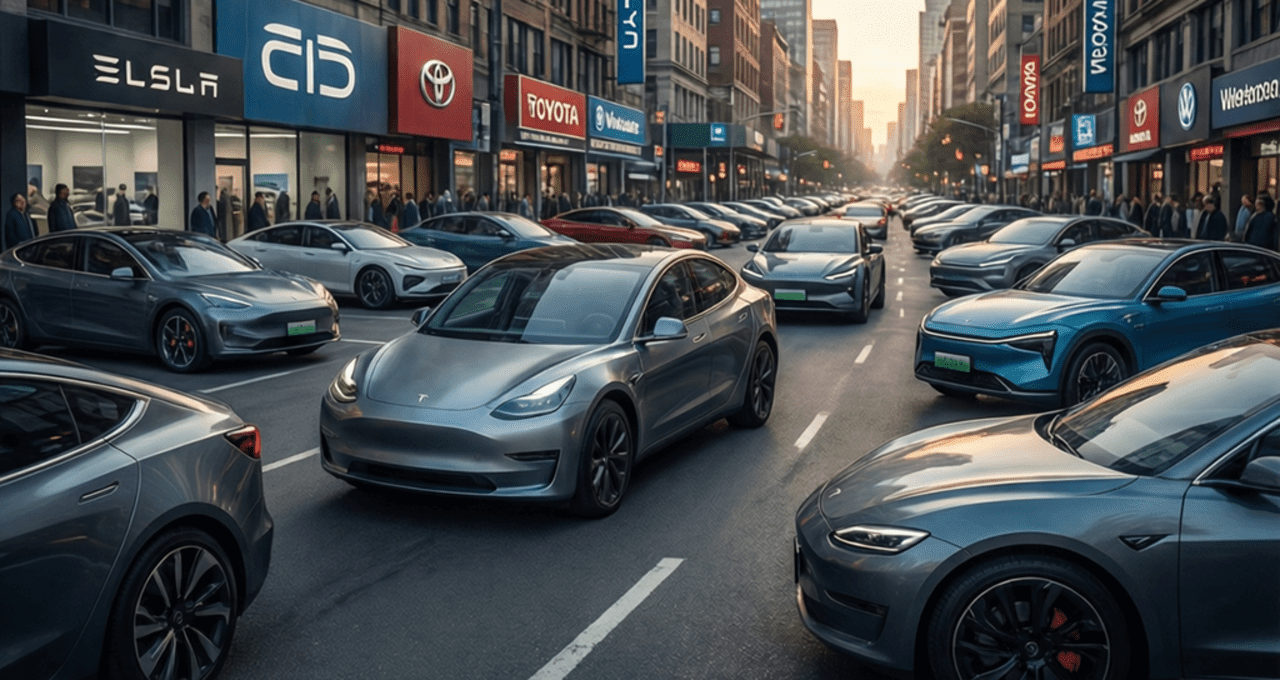
Global automakers are aggressively scaling up electric production, and electric buses and two-wheelers are becoming common sights across Nairobi's urban transit routes. Yet, when individual motorists look to buy a private car, petrol and hybrid powertrains still dominate purchase decisions. Unpacking this choice reveals seven key operational, economic, and cultural friction points.
1. Public Charging Infrastructure Is Still Nairobi-Centric
While conventional petrol stations dot nearly every rural trading centre and highway intersection, public EV charging infrastructure remains confined largely to Nairobi's upscale commercial hubs, such as Two Rivers Mall, Sarit Centre, Village Market, and Karen Waterfront, alongside a handful of pioneer charging locations along the Nakuru and Mombasa transit corridors.
This geographic imbalance creates real friction for EV owners. Finding an available plug often means competing with commercial electric taxi fleets, arriving to find slow 7 kW to 22 kW AC plugs rather than 50 kW+ DC fast chargers, or managing plug standard mismatches. Japanese used imports rely on CHAdeMO ports, European models use CCS2, and Chinese units utilize GB/T connectors, which frequently requires owners to source costly heavy-duty adapters.
2. The Upfront Purchase Price Barrier
While an electric vehicle generates clear long-term savings by eliminating engine oil, spark plugs, and expensive petrol fills, the high-voltage lithium-ion traction battery accounts for 35% to 40% of the vehicle's manufacturing cost. This upfront weight directly impacts import pricing.
Under KEBS KS 1515:2019 regulations, imported used vehicles must be less than eight years old. Importing a modern pre-owned electric vehicle equipped with a usable 50 kWh to 60 kWh battery requires significantly more upfront capital than purchasing a reliable locally used Toyota, Mazda, or Honda within the popular KES 900,000 to KES 1.8 million price range.
3. Highway Range & Escarpment Anxiety
A central question for prospective buyers is whether an electric car can handle long upcountry journeys to Nakuru, Kisumu, or Eldoret without stranding its passengers. Budget-friendly used EVs on the market, such as earlier 24 kWh to 40 kWh Nissan Leafs, offer realistic real-world ranges of 140 km to 240 km per charge.
Crucially, Kenyan driving conditions demand far more energy than steady-state laboratory tests indicate. Steep climbs up the Great Rift Valley escarpment, continuous air conditioning use in coastal heat, aggressive highway overtaking, and multi-hour traffic delays on major arteries exhaust battery reserves quickly, elevating range anxiety into a primary concern.
4. An Unproven Second-Hand Market & Degradation Concerns
The Kenyan pre-owned auto market relies on predictable resale value and accessible garage inspections. With a traditional combustion vehicle, any competent mechanic can evaluate engine compression, transmission shifts, and chassis condition before money changes hands.
Conversely, an EV's residual value depends almost entirely on its high-voltage battery's State of Health (SoH). High ambient temperatures and frequent rapid DC charging gradually degrade cell capacity over time. Because replacing a degraded traction battery pack can cost hundreds of thousands of shillings, buyers remain wary of entering the second-hand EV market without certified, independent battery diagnostics.
5. Home Charging Constraints for Apartment Dwellers
The core economic benefit of EV ownership comes from charging the vehicle overnight at home while it sits idle. However, a major proportion of urban motorists in Nairobi, Mombasa, and Kisumu reside in apartment complexes or gated developments featuring shared, unassigned parking spaces.
Navigating landlord approvals, running dedicated wiring from a third-floor apartment meter down to ground parking, or securing permission to install a 7 kW wallbox presents major logistical hurdles. Forcing apartment renters to rely solely on commercial public chargers undermines both the convenience and economic advantage of going electric.
6. Service Gaps & Maintenance Misconceptions
Misinformation regarding EV reliability remains widespread. On one hand, electric powertrains are inherently robust; they offer immediate torque, feature sealed high-voltage packs rated to IP67 water resistance standards, and eliminate friction-heavy components like spark plugs, timing belts, and multi-gear automatic gearboxes.
On the other hand, genuine maintenance challenges persist. Independent repair shops equipped with high-voltage diagnostic gear and certified safety equipment are scarce outside major metropolitan centres. Furthermore, replacement body panels, specialized glass, and suspension components for newer EV brands are not yet stock items like established Toyota or Nissan spare parts.
7. Tariff Metering Complexities & Power Costs
Kenya has established forward-thinking fiscal policies to support clean transport, including the headline 10% EV excise duty rate and EPRA's discounted KES 8/kWh off-peak e-mobility tariff. However, operational friction remains when applying these policies to everyday residential settings.
Most residential households charge vehicles using standard domestic KPLC prepaid meters. Once fuel cost adjustments, forex fluctuations, EPRA/WRA levies, and 16% VAT are factored in, effective domestic rates rise to KES 28 to KES 35 per kWh. Applying for a separate dedicated e-mobility meter requires extra upfront paperwork and installation costs. Additionally, inconsistent KRA Current Retail Selling Price (CRSP) entries for newer EV models can make import duties unpredictable for early adopters.
A Essential Pre-Purchase Checklist for EV & Hybrid Buyers
If you evaluate your daily driving routine and conclude that an electric or self-charging hybrid vehicle aligns with your needs, completing a thorough pre-purchase inspection is vital before finalizing payment. Following a structured checklist helps protect your investment:
Verify Traction Battery State of Health (SoH): Never rely solely on dashboard range indicators, as these can be reset or adjusted. Have a technician plug in a specialized OBD-II diagnostic scanner, such as LeafSpy for Nissan Leafs or OEM software for Toyota and Honda hybrids, to verify that the battery State of Health exceeds 80% with uniform cell voltages across all modules.
Inspect Charging Cables & Port Compatibility: Confirm whether the vehicle uses Type 2 / CCS2 (the standard fast-charging protocol in Kenya), CHAdeMO / Type 1 (Japanese imports), or GB/T (Chinese imports). Ensure the seller includes the original 3-pin portable home charging brick (EVSE) alongside any necessary heavy-duty adapters.
Examine the Underbody Battery Tray: Because EV battery packs sit flat along the vehicle chassis, place the car on a hydraulic lift to inspect the protective underbody casing. Look carefully for structural dents, scrapes, or breached seals resulting from rough road surfaces or unpainted speed bumps.
Perform Official NTSA Verification: Run an official NTSA Motor Vehicle Search (KES 550) via eCitizen to verify that legal ownership details match the seller's National ID and KRA PIN, confirm there are no active bank caveats, and verify that chassis and motor serial numbers match logbook documentation. For additional buyer protection guidelines, review our Buying and Selling Safety Guide.
Frequently Asked Questions
1. What tax rates apply when importing an electric vehicle into Kenya?
Under KRA customs frameworks, fully electric passenger cars qualify for a reduced Excise Duty of 10%, compared to 20%–35% for conventional petrol or diesel vehicles. Standard import charges apply, including 25% Import Duty, 16% VAT (with zero-rated VAT benefits available on lithium-ion batteries and electric transit buses), a 2% Railway Development Levy (RDL), and a 2.5% Import Declaration Fee (IDF). All imported used units must adhere strictly to KEBS KS 1515:2019 8-year age restrictions and right-hand drive mandates.
2. How much does it cost to charge an electric car in Kenya?
When charging via standard residential KPLC meters (costing KES 30–35 per kWh including taxes and statutory levies), fully charging a 40 kWh Nissan Leaf costs roughly KES 1,200 to KES 1,400 to achieve ~220 km of city driving range (approximately KES 5.50 per km). On a dedicated KPLC E-Mobility Tariff (KES 8/kWh off-peak and KES 16/kWh peak before statutory additions), that same full charge drops to between KES 500 and KES 850 (representing roughly KES 2.50 to KES 4.00 per km), delivering substantial operational savings over equivalent petrol power.
3. Should I choose a fully electric car or a hybrid in Kenya today?
Choosing a fully electric vehicle (BEV) makes practical sense if you have dedicated, secure home parking for overnight charging and drive primarily within urban centres like Nairobi or Mombasa on daily commutes under 180 km. Conversely, selecting a self-charging hybrid (HEV), such as a Toyota Fielder Hybrid or Honda Fit Hybrid, is the ideal choice if you reside in apartment housing without charging setups or regularly travel long upcountry routes where fast-charging points remain limited.
Was this guide helpful?
Your feedback helps us keep our Kenyan car buying and selling guides accurate.