Should you pay a car import deposit in Kenya? Learn the 2026 rules on KRA KD plates, CRSP Version II duties, NTSA e-logbook QR checks, and safe buying of in-stock vehicles.
Paying a large upfront car import deposit to a dealer or social media broker in Kenya is not safe unless the arrangement is governed by a formal advocate-witnessed contract, strict milestone payments tied to verifiable shipping documents, and enforceable refund guarantees, because publicized High Court commercial rulings in Nairobi in 2025 and 2026 have forced deposit-funded import agencies to refund millions of shillings for vehicles that were never delivered. For most Kenyan buyers, the safest path is to insist on physical viewing first by choosing vehicles already landed and in stock in Kenya, verifying Kenya Revenue Authority (KRA) customs clearance on any Kenya Dealer (KD) plate unit, and authenticating legal ownership through the National Transport and Safety Authority (NTSA) e-Logbook QR verification tool and a KES 550 eCitizen motor vehicle search before paying a single shilling.
Buying a vehicle in Kenya during late 2026 requires sharper regulatory awareness and stronger financial caution than ever before. Average asking prices for locally used cars have climbed steadily toward KES 1.5 million as port duties and exchange rates drive up replacement costs, while Nairobi pump tariffs under the Energy and Petroleum Regulatory Authority (EPRA) cycle for November 15 to December 14, 2026 stand at KSh 226.96 per litre for Super Petrol and KSh 227.76 per litre for Diesel. As families and commuters rush to acquire reliable cars ahead of December upcountry travel, the gap between legitimate dealerships and risky upfront-deposit operators has become the single biggest threat to a buyer's savings.
On kemotives, buyers and sellers interact directly with transparent upfront asking prices rather than chasing vague social media promises. Whether you are evaluating an unregistered fresh import carrying KD plates at a Nairobi yard or negotiating for a Kenyan-registered family crossover, understanding how Kenya's latest 2026 customs, registration, valuation, and inspection rules work will protect your capital from start to finish.
Information, statutory procedures, and regulatory statuses in this guide have been verified against official National Transport and Safety Authority (NTSA), eCitizen, Kenya Revenue Authority (KRA), and Kenya Bureau of Standards (KEBS) KS 1515:2019 guidelines as of 18 November 2026.
Is It Safe to Pay an Import Deposit to a Car Dealer in Kenya in 2026?
Paying a substantial advance deposit to import a vehicle on order carries significant counterparty risk in Kenya today, and you should never hand over cash simply on the strength of social media branding or promised savings over showroom stock. While legitimate clearing and importing companies exist across Mombasa and Nairobi, the traditional pre-order model exposes buyers to cash-flow commingling, currency movements, and customs changes outside the buyer's control.
Recent consumer disputes across the Kenyan automotive sector illustrate exactly how deposit-funded import promises break down. Over the course of 2025 and 2026, high-profile High Court commercial orders compelled prominent import agents in Nairobi to refund substantial customer deposits after buyers paid upfront for European and Japanese vehicles that failed to arrive on schedule. When an intermediary depends on new client deposits to finance older shipments, cover yard overheads, or absorb foreign exchange swings, any supply chain bottleneck or cash crunch leaves the newest deposit holder holding little more than a receipt and a long civil court queue.
Beyond licensed but overstretched import intermediaries, unregulated social media groups and short-video platforms present even more immediate dangers for car shoppers looking for bargains:
Working-Capital Commingling in Pre-Order Agencies: Unlike buying an existing car standing in front of you, wiring KES 500,000 to KES 2,000,000 to an import agent weeks before a vessel sails turns you into an unsecured creditor. If the business faces financial strain, recovers slowly from port delays, or disputes refund terms, recovering your money through arbitration or court orders can take months or years.
Fake Bank Repossession and Port Auction Hooks: Fraudsters regularly publish polished short videos claiming to offer distress-sale Mazda Demio hatchbacks, Toyota Fielder wagons, or executive crossovers at deep discounts from bank repossession yards or Mombasa Port auctions. Their sole objective is to persuade hurried buyers to send M-Pesa facilitation, reservation, or gate-pass fees before disappearing.
Price on Inbox Listings and Concealed Liabilities: Social media advertisements that omit the asking price and invite buyers to send a direct message frequently obscure major costs. Once you arrive or begin negotiating, the quoted figure may exclude KRA customs duties, retail NTSA registration fees on KD-cleared stock, unpaid eCitizen Instant Fines, or active bank caveats tied to previous owners.
Absence of Marketplace Escrow Traps: Buyers should also be cautious of anyone claiming to hold vehicle purchase funds in escrow on behalf of an online listing site. As stated on the kemotives buying guide, kemotives never collects payment for a vehicle and offers no escrow service. You agree the price directly with the seller and release traceable funds only after you have inspected the physical car and verified official government records.
If your situation genuinely requires importing a rare specification that is unavailable locally, never transfer 100% of the vehicle cost upfront. Protect yourself by executing a formal sale agreement witnessed by an Advocate of the High Court specifying exact delivery dates, automatic refund penalties if shipping misses its deadline, and milestone payments linked to verifiable proof such as the overseas Export Certificate, the Quality Inspection Services Inc. Japan (QISJ) or East Africa Automobile Services (EAA) Certificate of Roadworthiness, and an authenticated Bill of Lading issued directly in your name. Whenever possible, however, choosing physical viewing first on in-stock cars ready in Nairobi or Mombasa removes import-deposit vulnerability altogether.
What Are the KRA Kenya Dealer (KD) Number Plate Clearance Rules at Mombasa Port in 2026?
Under the joint Kenya Revenue Authority (KRA) and NTSA port clearance framework, licensed motor vehicle dealers can pay all customs duties at Mombasa Port to release imported cars to their showrooms while deferring final retail NTSA registration until a buyer purchases the vehicle, using a chassis-linked Kenya Dealer (KD) identifier. Understanding how this system works prevents buyers from confusing legitimate duty-paid showroom stock with unpaid customs inventory or improperly registered vehicles.
Historically, importers had to register a vehicle and pay NTSA registration fees during port clearance even before finding an end customer. By separating customs clearance from retail registration inside the Kenya Revenue Authority (KRA) Integrated Customs Management System (iCMS) and syncing those records directly with the NTSA digital portal, regulators made it easier for legitimate dealerships to stock cleared foreign-used vehicles in Nairobi, Nakuru, Eldoret, and Mombasa yards without tying up registration fees prematurely.
When you inspect an unregistered import displaying red-and-white KD plates at a Kenyan car yard, verify how the KRA and NTSA rules apply at every step:
Full Customs Duties Must Already Be Settled: Deferring NTSA registration does not mean deferring KRA customs taxes. Before a dealer can move an imported car out of a Mombasa Container Freight Station (CFS), the licensed importer must lodge a declaration in iCMS, settle all Import Duty, Excise Duty, Value Added Tax (VAT), Import Declaration Fee (IDF), and Railway Development Levy (RDL), and clear physical verification by KRA customs officers leading to a Centralised Release Officer authorization.
Unique Chassis-to-KD Synchronization: Prior to exiting the customs gate, the dealership applies through the NTSA portal for a Kenya Dealer identifier that pairs its authorized KD number with the vehicle's exact chassis number. That pairing synchronizes automatically via API into KRA's iCMS database, allowing port gate officers to verify that the car leaving customs matches the authorized dealer record.
Strict Operational Limits Under the Traffic Act: Under Section 24 of the Traffic Act (Cap 403), KD plates are strictly legal trade identifiers rather than permanent road plates. Dealers may only use KD plates to transfer cleared stock between ports, CFS yards, and showrooms, to drive vehicles for statutory inspection tests, or to conduct supervised customer test drives accompanied by valid trade motor insurance. Dealers are barred from using KD plates for personal errands, carrying commercial passengers or cargo, or leaving KD plates mounted once a car has been registered to a retail buyer.
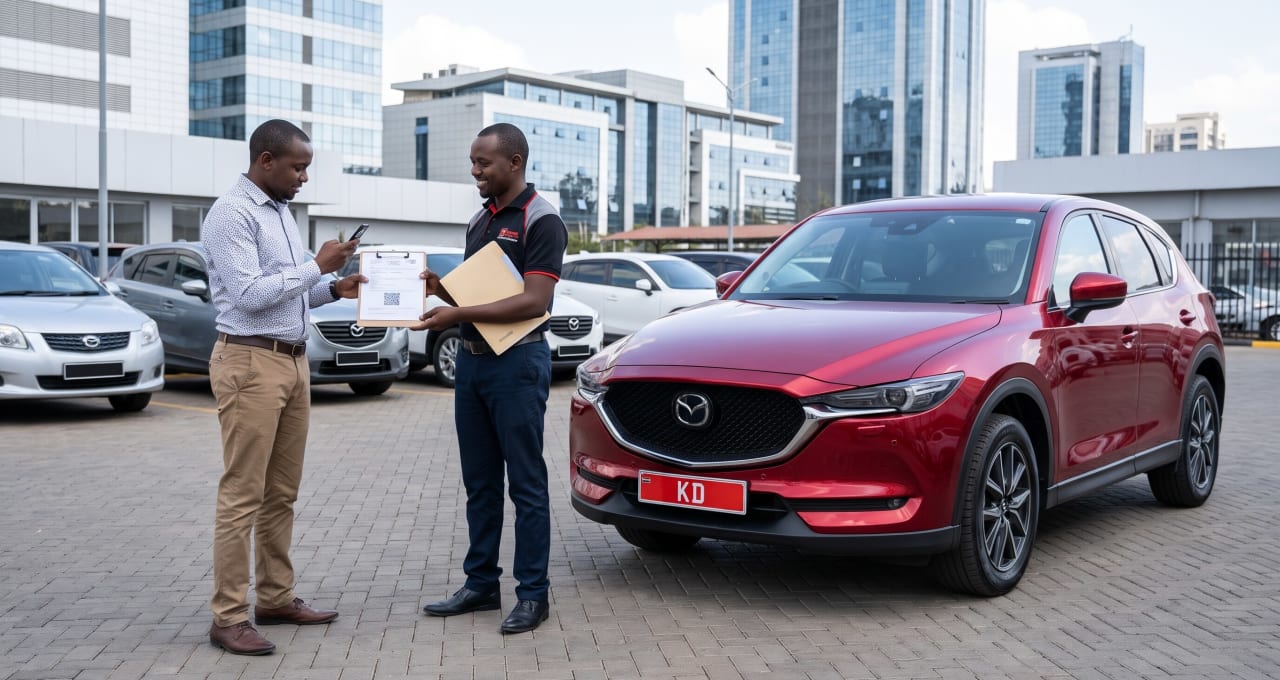
Verification Before You Pay for a KD-Plated Vehicle: Before paying for an unregistered showroom car, ask the dealer to present the KRA Customs Entry, official KRA duty payment receipts, the CFS Release Order, the original overseas Export Certificate, and the pre-export Certificate of Roadworthiness. Confirm that the chassis number stamped on the vehicle firewall matches every document character for character, and ensure that first-time NTSA registration on eCitizen is initiated directly into your National ID and KRA PIN upon payment.
You can explore more regulatory walkthroughs on the kemotives automotive blog, or compare ready-to-view foreign used vehicles on kemotives to check live asking prices across landed stock.
How Do KRA CRSP Version II Talks and the KEBS 8-Year Rule Affect 2026 Car Prices?
Mid-November 2026 consultations between KRA leadership and automotive industry stakeholders over a proposed CRSP Version II valuation framework, combined with the December 31, 2026 port clearance cutoff for 2019-registered imports under KEBS KS 1515:2019, create significant cost and compliance risk for buyers ordering vehicles from overseas late in the year. Because Kenyan import duties are computed from official benchmark showroom values rather than overseas auction receipts, any tax-schedule shift or shipping delay directly affects a buyer's final bill.
To understand why valuation updates matter so much, it helps to trace how the Current Retail Selling Price (CRSP) framework has evolved. For several years, KRA relied on its 2019 CRSP list to establish the brand-new baseline value of imported models before applying statutory age depreciation up to a maximum 70% discount for cars approaching eight years old. In mid-2025, KRA introduced an expanded CRSP overhaul slated to take effect on July 1, 2025, covering more than 5,200 models and trims. Importers and industry associations immediately petitioned the High Court of Kenya, arguing that the revised schedule lacked sufficient public participation under the Constitution, bypassed statutory instrument procedures, and imposed steep valuation increases on popular models, resulting in interim High Court stays while petitions proceeded.
Against that backdrop of ongoing litigation and valuation disputes, mid-November 2026 discussions between KRA and industry stakeholders centered on a refined approach often referred to as CRSP Version II. This proposed refinement seeks to account more accurately for specific factors such as a vehicle's exact country of origin, trim code, and age formulation. For an everyday Kenyan buyer weighing a direct import order against a car already sitting in a Nairobi showroom, two immediate consequences stand out:
Landed Tax Unpredictability on Direct Orders: Because KRA assesses duties based on the valuation rules active on the date the customs entry is assessed rather than the date you paid your deposit to an agent abroad, sudden trim reclassifications or valuation updates between auction purchase and port arrival can raise your duty payable at Mombasa by tens or hundreds of thousands of shillings.
Critical 2019 Countdown Under KEBS KS 1515:2019: Enforced strictly by the Kenya Bureau of Standards under the KS 1515:2019 standard, no used vehicle may enter Kenya if more than eight calendar years have elapsed since its year of first registration. During calendar year 2026, the oldest permissible imports are vehicles first registered in 2019. On January 1, 2027, that eligibility cutoff immediately shifts to 2020 and newer registrations. Any 2019-registered vehicle whose vessel suffers berth congestion or routing delays and clears into January 2027 faces mandatory rejection at the Port of Mombasa, leaving the owner liable for re-exportation or destruction costs.
Purchasing a duty-paid vehicle already landed in Kenya eliminates both risks completely. The taxes have already been assessed and settled, the year of registration complies with port clearance, and the asking price you negotiate in Kenyan Shillings is final.
How Do You Verify an NTSA e-Logbook QR Code and Ownership on eCitizen?
To verify an NTSA e-Logbook in Kenya, scan the encrypted QR code printed on the electronic registration certificate using your smartphone or the official NTSA Mobile App, enter the extracted verification code alongside the vehicle's chassis number on the official NTSA Service Portal on eCitizen, and always follow up with an Official Motor Vehicle Search (KES 550) on eCitizen to confirm registered ownership and check for hidden bank loan caveats.
Following NTSA's digital modernization rollout, newly processed vehicle registrations and ownership transfers on eCitizen generate an electronic Certificate of Registration, widely called the e-Logbook, featuring a tamper-resistant QR code linked directly to government records. At the same time, buyers frequently ask whether older green or blue paper logbook booklets are still legal in late 2026. Under Constitutional Petition No. E492 of 2026, petitioners challenged aspects of the digital transition on public participation, cybersecurity, and data-protection grounds. In August 2026, the High Court of Kenya issued a conservatory order restraining NTSA from permanently invalidating or discontinuing existing physical paper logbooks held by vehicle owners while the main petition proceeds, while permitting NTSA to continue operating the digital e-Logbook platform for new registrations and transfers.
This means you will encounter both valid legacy paper logbooks and digital QR-coded e-Logbooks in the Kenyan marketplace right now. Following a disciplined four-step verification workflow protects you regardless of which format a seller presents:
Authenticate the e-Logbook QR Code Directly on Official NTSA Channels: If the seller provides a printed or PDF e-Logbook, open the official NTSA Mobile App signed in with your eCitizen credentials and select the Document Verification utility, or scan the QR code with a standard scanner to reveal its unique verification string and enter it together with the vehicle's chassis number on serviceportal.ntsa.go.ke. Never rely on a screenshot or third-party link sent by a stranger on WhatsApp, because NTSA verifies e-Logbooks solely through its official portal and mobile app.
Run the Mandatory KES 550 Official NTSA Motor Vehicle Search on eCitizen: QR verification confirms that a certificate is authentic, yet prudent buyers must still pay the statutory KES 550 fee inside their own eCitizen account to pull the live Official Motor Vehicle Search. This record confirms the current registered owner's full legal name, National ID number, and KRA PIN, and immediately reveals whether a commercial bank, SACCO, or microfinance lender holds an active chattel mortgage or loan caveat blocking transfer.
Check for Unpaid eCitizen Instant Fines and Arrears: With automated smart-camera traffic enforcement expanding across major urban corridors and highways via eCitizen Instant Fines, ask the seller to log into their NTSA eCitizen dashboard in your presence to verify that there are zero pending traffic fines, court holds, or commercial KRA Advance Tax arrears linked to the registration plate.
Match Physical Chassis and Engine Stampings in Daylight: Finally, inspect the car in person at a busy public location during daylight hours. Open the bonnet and locate the chassis number stamped directly into the metal firewall or frame rail, as well as the engine block number, and confirm every digit matches both the logbook and your eCitizen search results without signs of welding, grinding, or plate cloning.
For additional protection against duplicate Facebook Marketplace photos, odometer tampering, and viewing-fee demands, consult the kemotives Buying and Selling Safety Guide and learn more about what kemotives checks on listings.
What Is the Status of the NTSA 4-Year Private Car Inspection Rule in Kenya?
Under the Traffic (Motor Vehicle Inspection) Rules, 2026, privately owned vehicles more than four years old from their recorded date of manufacture are legally subject to an annual mechanical roadworthiness inspection, but NTSA clarified that police officers will not enforce mandatory roadside checks on private cars immediately while private testing centres under the Public-Private Partnership (PPP) framework continue scaling up capacity.
Confusion around the four-year inspection rule has caused unnecessary anxiety among buyers shopping for clean 2016 to 2022 locally used and newly imported vehicles. Knowing exactly what the 2026 regulations require and what is currently enforced helps you budget sensibly and avoid roadside misinformation:
Who the 4-Year Inspection Framework Covers: The rules stipulate annual testing once a private passenger vehicle passes four years from its manufacture year, with explicit exemptions for categories such as agricultural tractors, motorized pedal cycles, golf carts, and all-terrain vehicles. Mandatory inspections also remain required whenever a vehicle is involved in a serious road accident, undergoes structural or engine modifications, or goes through re-registration.
Statutory Booking Process and Cost Structure: Inspections are booked through the NTSA eCitizen portal rather than informal brokers. Under the 2026 fee schedule for private passenger cars under 3,000cc, motorists pay roughly KES 1,000 for the NTSA booking fee alongside up to KES 1,000 charged at the testing station, totaling approximately KES 2,000 per annual test before any required mechanical repairs.
Current Enforcement Reprieve and Buyer Responsibility: Following public feedback over cost-of-living pressures and limited testing-lane capacity when the framework rolled out in July 2026, NTSA directed that traffic officers hold off on immediate roadside enforcement against private motorists until private PPP testing stations are fully operational nationwide. However, buyers should never confuse an enforcement deferral with a clean bill of health. Before buying any car older than four years, always take an independent mechanic to inspect suspension bushings, brakes, fluids, underbody rust, and OBD2 electronic fault codes in person.
How to Shop Safely for In-Stock Vehicles on kemotives Instead of Risking Import Deposits
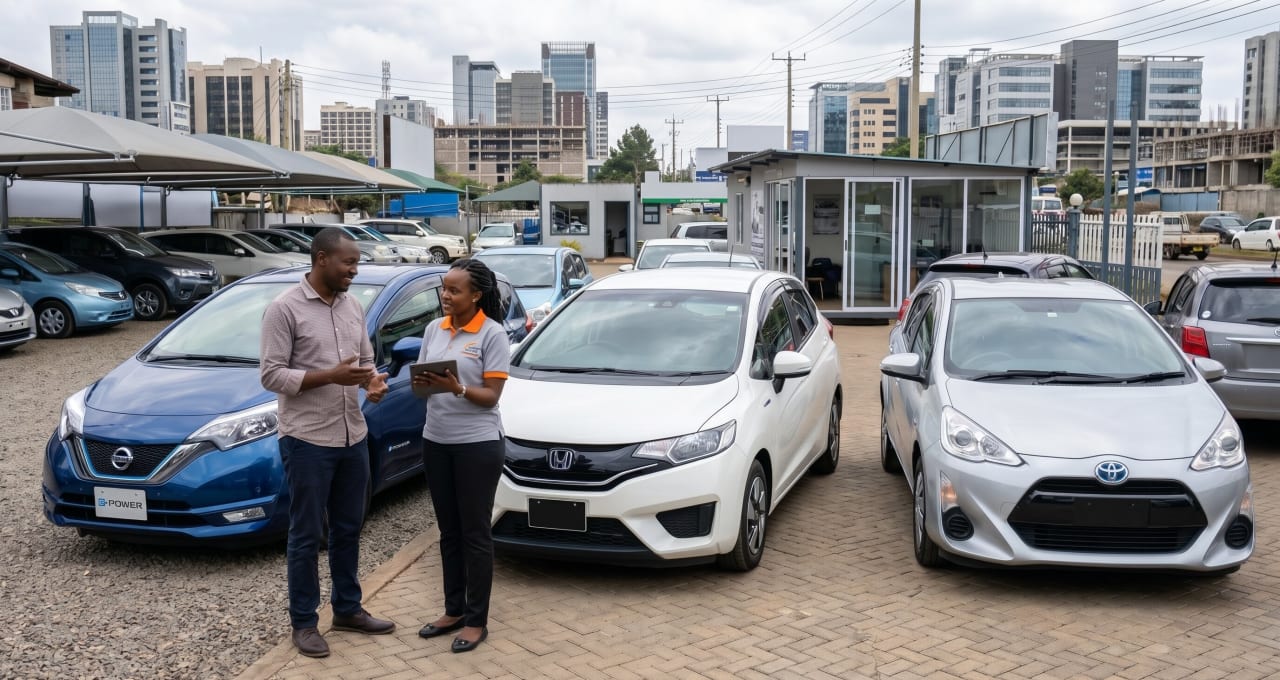
Shopping from verified, physical inventory already landed in Kenya allows you to inspect every panel, verify customs and eCitizen records before parting with cash, and drive away within days instead of gambling on a 45-day to 75-day overseas shipment. On kemotives, buyers can browse real Foreign Used and Locally Used vehicles physically located in Nairobi and across Kenya with full specifications and upfront KSH asking prices displayed openly on every listing card.
Several built-in safeguards help remove friction and protect both sides of a transaction:
Automatic Number Plate Privacy Protection: Every listing photo uploaded to kemotives has its registration plate automatically blurred (Auto-Blurred), and only the prefix is displayed publicly. This directly counters photo theft and plate cloning, where fraudsters steal legitimate dealer or private owner photos from social media and repost them at suspiciously low prices to trap buyers into sending viewing deposits. Once you arrange a viewing, simply ask the seller for the full plate number to run your KES 550 eCitizen search.
Verified Seller Badges and Honest Price Context: Sellers who submit their National ID and business registration documents for review by the kemotives team receive a Verified badge, confirming who you are dealing with (while reminding buyers to always inspect the specific vehicle and logbook independently). Where at least three live listings exist for the same make, model, and year, listings also display Good, Fair, or High price indicators anchored against live median asking prices on the kemotives Price Guide, so you can spot suspiciously cheap "too good to be true" scam traps immediately.
Budget City Commuters and Clean Locally Used Cars Under 1.5 Million Shillings: With locally used averages rising above KES 1 million, shoppers looking for clean locally used cars under 1.5m in Nairobi or economical daily runners can inspect ready-to-drive Toyota, Mazda, Suzuki, and Nissan stock already in the country. Popular physical listings include the Mazda Demio, Toyota Vitz, Suzuki Swift, the ultra-efficient 660cc Daihatsu Wake, the Nissan Note e-Power, and the dependable locally used Toyota Probox for light business errands, alongside economical station wagons such as the Honda Shuttle Hybrid and Toyota Corolla Fielder.
Seven-Seater Family MPVs and December Travel Crossovers Ready Now: Families preparing for upcountry holiday trips who want seven-seater family cars under 2 million shillings or modern crossovers can compare physical locally used cars and duty-paid foreign used vehicles side by side using our comparison tool. High-demand models available locally include the Toyota Sienta, Toyota Voxy, and foreign-used 2019 Toyota Noah, as well as the Mazda CX-30, Mazda CX-5, and seven-seater 2.2-litre diesel Mazda CX-8, the Honda Vezel, the Toyota Harrier, and sought-after compact four-wheel-drive vehicles like the 2018 to 2020 Suzuki Jimny Sierra.
If you are a Kenyan car yard holding newly cleared KD-plate stock or a private motorist upgrading before year-end, you can also sell your car on kemotives without losing margins to informal street brokers. Our free Starter plan (KES 0 monthly) allows up to 10 active listings with automatic plate blurring and AI Smart-Fill spec detection, charging a modest 1% to 3.5% success fee only if your car sells to a buyer introduced through the platform. Dealerships and active sellers who upgrade to paid tiers on the kemotives pricing page, starting with the Basic plan at KES 2,480 per month for 25 listings and the Growth plan at KES 4,000 per month for 50 listings, enjoy 0% commission on every sale and direct phone and WhatsApp contact visibility to signed-in buyers once their KYC verification is approved. To compare which package fits your showroom turnover, read our kemotives seller subscription guide.
Frequently Asked Questions About Car Import Deposits, KD Plates, and NTSA Checks in Kenya
1. Is it safe to pay a car import deposit to a car dealer in Kenya in 2026?
No, paying a large upfront import deposit without strict legal safeguards is high risk in Kenya, because several publicized High Court rulings in 2025 and 2026 ordered import agencies to refund millions of shillings for vehicles ordered on advance cash deposits that were never delivered. Whenever possible, prioritize physical vehicles already landed and cleared in Kenya, inspect the vehicle and customs paperwork in person, and never wire money solely based on social media promises or "price on inbox" promotions.
2. How do KRA Kenya Dealer (KD) number plate clearance rules work at Mombasa Port?
Under KRA and NTSA rules, licensed Kenyan dealerships pay all statutory import taxes (Import Duty, Excise Duty, VAT, IDF, and RDL) through KRA's iCMS system at Mombasa Port while deferring retail NTSA registration fees until the car is sold to an end buyer. Before leaving customs, NTSA issues a unique KD identifier linking the dealer's plate to the specific chassis number; under Section 24 of the Traffic Act, KD plates may only be used for port-to-yard transfers, inspections, and supervised test drives.
3. How do I verify an NTSA e-Logbook QR code and check car ownership in Kenya?
To verify an NTSA e-Logbook QR code, scan the code via the official NTSA Mobile App logged into your eCitizen account or copy the verification code generated from the QR scan and enter it alongside the car's chassis number on serviceportal.ntsa.go.ke. Always supplement the QR check by running an Official NTSA Motor Vehicle Search (KES 550) on eCitizen to verify the registered owner's ID and KRA PIN and confirm there are no bank loan caveats.
4. Are old physical paper car logbooks still valid in Kenya in 2026?
Yes, existing physical paper logbooks remain legally valid in Kenya in late 2026. Under Constitutional Petition No. E492 of 2026, the High Court issued conservatory orders in August 2026 barring NTSA from invalidating existing physical Certificates of Registration held by vehicle owners while allowing the authority to continue issuing QR-coded digital e-Logbooks for new registrations and ownership transfers.
5. How could KRA CRSP Version II valuation updates affect car import duty in 2026?
KRA calculates used-car import taxes from its Current Retail Selling Price (CRSP) benchmark database rather than your foreign purchase invoice, depreciated by up to 70% for cars seven to eight years old. Following legal stays on KRA's July 2025 CRSP revision and mid-November 2026 stakeholder consultations regarding a proposed CRSP Version II framework factoring in country of origin and age, direct importers face tax uncertainty while goods are in transit, whereas buying duty-paid stock already in Kenya locks in a final Kenyan Shilling price.
6. Is the NTSA 4-year private car inspection rule currently being enforced on Kenyan roads?
While the Traffic (Motor Vehicle Inspection) Rules, 2026 establish an annual inspection requirement for private vehicles older than four years from their date of manufacture, NTSA clarified that traffic police will not conduct immediate roadside enforcement checks on private motorists while private PPP testing centres continue scaling capacity. Regardless of enforcement delays, buyers should always arrange an independent garage hoist inspection and OBD2 diagnostic scan before purchasing any pre-owned car.
Ready to skip import deposit risk and inspect real vehicles already in Kenya? Browse verified Foreign Used Cars and Locally Used Cars on kemotives, check live asking ranges in the kemotives Price Guide, or review our Buying and Selling Safety Guide before scheduling your next viewing.
Was this guide helpful?
Your feedback helps us keep our Kenyan car buying and selling guides accurate.