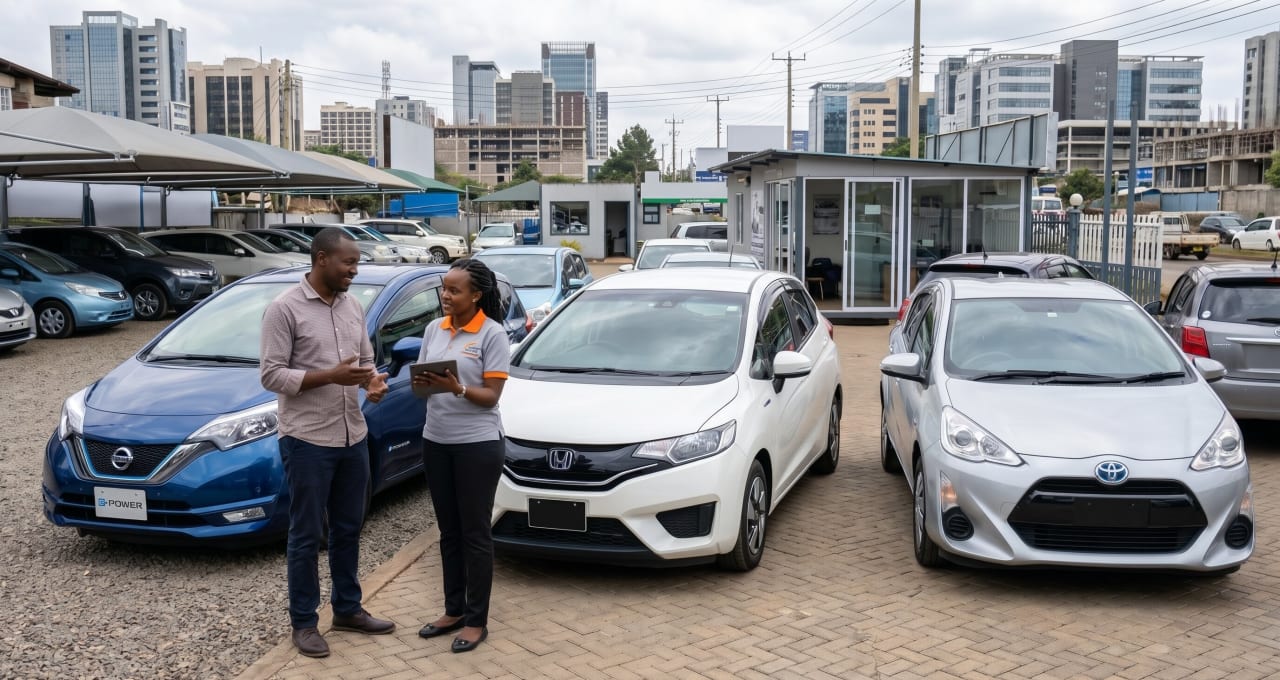
Discover the best hybrid cars in Kenya under 1.5 million shillings. Compare real-world fuel consumption, hybrid battery replacement costs, and asking prices for the Nissan Note e-Power, Honda Fit Hybrid, and Toyota Aqua.
The best hybrid cars in Kenya under 1.5 million shillings are the Nissan Note e-Power (HE12), the Honda Fit Hybrid (GP5), and the Toyota Aqua (NHP10). Delivering exceptional real-world fuel economy between 22 and 28 kilometres per litre on Kenyan roads, these three compact Japanese hatchbacks provide the ultimate financial protection against volatile pump prices without requiring external electric charging cables or specialized home wallboxes.
Selecting a fuel-efficient vehicle in Kenya has taken on renewed urgency following the latest Energy and Petroleum Regulatory Authority (EPRA) pricing cycle. In its gazetted price review for the November 15 to December 14, 2026 window, EPRA set Nairobi pump prices at KSh 226.96 per litre for Super Petrol and KSh 227.76 per litre for Diesel. Because diesel fuel is currently more expensive than super petrol at retail pumps across Kenya, motorists can no longer rely on small diesel engines to save money on daily running costs. When you factor in the sensitive particulate filters, fragile high-pressure fuel injectors, and elevated repair bills associated with modern turbodiesels on East African roads, self-charging petrol-electric hybrids have clearly emerged as the most cost-effective and dependable choices for private daily drivers and commercial ride-hailing operators alike.
On kemotives, the sub-1.5 million shilling price bracket represents the most active marketplace segment for smart buyers who want low mileage, modern safety features, and immediate fuel savings. Whether you are looking for an unregistered fresh import from Japan or a well-kept Kenyan-registered unit, understanding how the Nissan Note e-Power, Honda Fit Hybrid, and Toyota Aqua compare will help you choose the right vehicle for your daily commute, family errands, or transport business.
All regulatory figures, fuel pump tariffs, import compliance standards, and registration guidelines cited in this guide have been verified according to official EPRA, KEBS KS 1515:2019, KRA Customs, and NTSA eCitizen standards as of November 2026.
Why Hybrid Cars Are Dominating the Kenyan Market Under 1.5 Million Shillings
For decades, Kenyan motorists seeking low running costs bought small-displacement manual hatchbacks or imported compact diesel cars. Over the past three years, however, self-charging petrol-electric hybrid vehicles have captured the mainstream market for several practical and economic reasons:
Direct Protection Against High Pump Prices: When petrol hovers around KSh 227 per litre, driving an older conventional vehicle that delivers 10 to 12 kilometres per litre costs roughly KSh 20 to KSh 23 in fuel for every single kilometre traveled. By contrast, a self-charging hybrid achieving 24 kilometres per litre cuts your direct fuel outlay to less than KSh 10 per kilometre, putting tens of thousands of shillings back into your wallet every month.
Zero Dependency on Charging Infrastructure: Unlike plug-in electric vehicles (EVs) that require dedicated public fast-chargers or home charging sockets, self-charging hybrids generate 100% of their electrical power onboard. Kinetic energy that would normally be lost as brake heat is captured through regenerative braking, while the internal combustion engine automatically tops up the high-voltage traction battery whenever required. You simply refuel at any standard petrol station across Kenya and drive normally.
Low Engine Capacity and Cheaper Government Fees: Because the Nissan Note e-Power features a 1,200cc engine and both the Honda Fit Hybrid and Toyota Aqua utilize 1,500cc engines, statutory transfer and documentation costs remain low. On the official National Transport and Safety Authority (NTSA) portal on eCitizen, vehicles with engine capacities between 1,001cc and 1,500cc incur a much lower statutory transfer charge than larger executive SUVs and saloons.
Outstanding Urban Agility and Resale Liquidity: With overall lengths under four metres and tight turning circles, compact hybrids navigate narrow estate avenues, crowded shopping centre parking bays, and congested roundabouts along Uhuru Highway and Mombasa Road with remarkable ease. Furthermore, because fuel economy is the primary criterion for thousands of pre-owned vehicle shoppers in Nairobi, Kisumu, Nakuru, and Mombasa, clean hybrid hatchbacks enjoy rapid resale turnover when you decide to sell your car in the future.
You can explore live asking prices right now by browsing all vehicles for sale on kemotives, filtering directly for foreign used vehicles on kemotives, or checking Kenyan-registered inventory through our locally used vehicles catalogue.
1. Nissan Note e-Power (HE12): The Electric Driving Experience Without the Plug
The Nissan Note e-Power has become one of the most visible and sought-after compact cars on Kenyan roads since 2019 Japanese auction models crossed the eight-year import threshold. Its unique engineering sets it apart from traditional hybrid cars and gives Kenyan motorists a distinctive, responsive driving character.
How the Nissan e-Power System Works
Unlike conventional parallel hybrids where both the petrol engine and the electric motor take turns driving the wheels, the Nissan Note e-Power operates as a 100% series hybrid. Under the bonnet sits an efficient 1.2-litre, three-cylinder HR12DE petrol engine that is entirely disconnected from the drive wheels. The engine functions exclusively as an onboard power station, spinning a generator that channels electricity to a compact 1.5 kWh lithium-ion battery pack and an electric traction motor mounted on the front axle.
Because the front wheels are propelled solely by the electric motor, the Note e-Power produces 109 horsepower and an impressive 254 Newton-metres of instant torque from a standstill. Acceleration away from traffic lights is instantaneous, quiet, and exceptionally linear, providing an authentic electric-vehicle driving sensation without requiring an external charging cord. The system also introduces Nissan's innovative e-Pedal technology, which allows you to accelerate, decelerate, and bring the car to a smooth stop simply by modulating the accelerator pedal, significantly reducing driver fatigue during peak-hour traffic jams on Thika Road or Langata Road.
Real-World Kenyan Fuel Consumption
In dense Nairobi stop-and-go commuting where standard petrol cars consume excessive fuel idling at junctions, the Nissan Note e-Power excels because the petrol engine only turns on periodically at optimal revs to recharge the battery. Real-world Kenyan owners regularly report:
City and Peak-Hour Commuting: 22 to 26 kilometres per litre in heavy traffic conditions across Nairobi, Mombasa, and Kisumu.
Highway and Ring Road Cruising: 24 to 28 kilometres per litre along steady bypass routes such as the Southern and Eastern Bypasses when cruising between 80 and 100 kilometres per hour.
Aggressive Highway Driving: 18 to 21 kilometres per litre at sustained speeds above 110 kilometres per hour, where the 1.2-litre petrol generator must run continuously to supply high electrical demand to the motor.
Kenyan Market Pricing for Foreign Used and Locally Used Models
On kemotives, asking prices for the Nissan Note e-Power generally fall into two clear tiers based on registration status and cosmetic trim levels such as the Medalist, X, or Nismo editions:
Foreign Used (Fresh Japanese Imports, 2018 to 2019 Models): KES 1,250,000 to KES 1,480,000 for verified auction grades of 3.5, 4.0, or 4.5 arriving through Mombasa Port.
Locally Used (Kenyan-Registered, 2017 to 2018 Models): KES 1,050,000 to KES 1,280,000, offering tremendous value for budget buyers seeking immediate ownership without port clearance delays.
Interior Space, Suspension, and Ground Clearance on Kenyan Roads
The Note e-Power surprises many first-time buyers with its interior dimensions. Thanks to Nissan's smart packaging, rear-seat legroom rivals executive sedans in higher price brackets, allowing tall adult passengers to sit comfortably without their knees touching the front backrests. The boot offers 330 litres of luggage volume, which is ample for family supermarket runs or airport drop-offs.
The principal consideration for Kenyan buyers is ground clearance. In standard factory specification, the Note e-Power sits at 130 millimetres of clearance, which can scrape tall, non-standard speed bumps found in Nairobi residential estates when the car is carrying four adults. The standard recommendation among local mechanics is to install 20-millimetre to 25-millimetre polyurethane suspension spacers and fit slightly taller profile tyres, such as 185/65 R15, which raises the vehicle safely without compromising handling stability.
Maintenance Priorities and Hybrid Battery Replacement Costs
Routine servicing for the Note e-Power is straightforward because the 1.2-litre petrol engine undergoes significantly less mechanical stress than an engine that physically drives the wheels. Standard oil changes require zero-W-twenty or five-W-thirty synthetic oil every 5,000 to 7,500 kilometres along with genuine oil and air filters readily available along Kirinyaga Road, Ngong Road, and Industrial Area.
The 1.5 kWh lithium-ion battery pack is durable and typically lasts well beyond 180,000 kilometres when properly ventilated. If individual battery modules degrade over time, specialized automotive hybrid workshops in Nairobi can diagnose the pack using OBD2 computer scanners and replace individual weak cell blocks for approximately KES 15,000 to KES 25,000 per module. For high-mileage vehicles requiring a complete traction battery replacement, imported tested replacement packs cost between KES 90,000 and KES 140,000 including professional workshop installation.
Browse Nissan cars for sale on kemotives to view live asking prices and verify condition ratings.
2. Honda Fit Hybrid (GP5): Dual-Clutch Responsiveness and Magic Seats Utility
The third-generation Honda Fit Hybrid, designated by chassis code GP5, is the driver's choice in the compact hybrid category. Combining sharp European-inspired handling with unmatched interior versatility, the Fit Hybrid appeals to buyers who demand practical daily utility without sacrificing brisk acceleration and road feel.
How the Honda Sport Hybrid i-DCD System Works
Honda engineered the GP5 Fit around its Sport Hybrid Intelligent Dual-Clutch Drive (i-DCD) architecture. The powertrain pairs a direct-injected 1.5-litre, four-cylinder Atkinson-cycle Earth Dreams petrol engine producing 110 horsepower with a built-in high-output electric motor generating 29.5 horsepower, integrated directly into a seven-speed dual-clutch automated manual transmission. A high-voltage lithium-ion battery located under the boot floor powers the electric motor.
Unlike the step-less, continuous drone typical of conventional CVT gearboxes, the seven-speed dual-clutch transmission shifts through crisp mechanical gear ratios, providing a sporty and engaging driving feel on the open road. The system automatically switches between three distinct operating modes depending on driving demand: Pure EV Drive for gentle urban crawling, Hybrid Drive where both the engine and electric motor deliver combined power, and Engine Drive for efficient high-speed cruising along highways such as the Nairobi to Naivasha corridor.
Real-World Kenyan Fuel Consumption
The Honda Fit Hybrid delivers exceptional efficiency across diverse driving environments:
Daily City Commuting: 20 to 24 kilometres per litre in standard urban traffic with air conditioning active.
Open Highway Travel: 24 to 27 kilometres per litre on paved inter-county highways, benefiting from tall top-gear ratios on the seven-speed dual-clutch transmission.
Mixed Average Fuel Economy: Most Kenyan owners average around 22.5 kilometres per litre over monthly driving cycles, meaning a single 40-litre tank easily yields 850 to 900 kilometres of range.
Kenyan Market Pricing for Foreign Used and Locally Used Models
Prices for the Honda Fit Hybrid reflect its reputation for premium cabin finishes and engaging performance:
Foreign Used (Fresh Japanese Imports, 2018 to 2019 Models): KES 1,280,000 to KES 1,500,000 depending on package grades such as the F Package, L Package, or sporty S Package with alloy wheels and body styling.
Locally Used (Kenyan-Registered, 2016 to 2018 Models): KES 1,080,000 to KES 1,300,000, making it an accessible option for motorists seeking a reliable family runabout.
The Famous "Magic Seats" and Everyday Interior Practicality
Where the Honda Fit Hybrid completely outclasses its rivals is cabin flexibility. Honda's patented "Magic Seats" in the rear can fold completely flat into the vehicle floor to create a cavernous, van-like cargo space of over 1,000 litres, easily accommodating bicycles, flat-pack furniture, or commercial delivery cartons. Alternatively, the rear seat bases can flip upright against the backrests, creating a tall vertical cargo zone from floor to ceiling that allows you to transport tall potted plants, large television screens, or bulky agricultural produce with the rear doors closed.
In terms of road clearance, the GP5 Fit sits at approximately 135 millimetres. While slightly higher than the Note e-Power, Kenyan owners frequently install 20-millimetre front and rear suspension spacers and upgrade to 185/65 R15 tyres to comfortably traverse steep commercial speed bumps and unpaved estate access roads during rainy seasons.
Essential Transmission Servicing and Battery Replacement Costs
The most critical maintenance requirement for any Honda Fit Hybrid owner in Kenya is the dual-clutch transmission. The i-DCD dual-clutch gearbox and its hydraulic clutch actuator require dedicated, genuine Honda Ultra ATF-DW1 and DOT 4 brake fluid flushes every 20,000 to 30,000 kilometres. Skipping this fluid service or allowing unspecialized roadside mechanics to pour generic automatic transmission fluid into the dual-clutch unit will cause clutch judder, rough shifts, and eventual transmission error warnings.
The high-voltage lithium-ion traction battery in the GP5 is exceptionally durable when the cooling air intake situated near the rear passenger seat remains unobstructed. Should the battery pack experience cell degradation after years of hard use, replacement Japanese reconditioned battery packs generally retail between KES 95,000 and KES 150,000 in Nairobi, with individual cell repairs costing between KES 18,000 and KES 30,000 per module.
Check out Honda vehicles on kemotives to discover verified listings and compare asking prices.
3. Toyota Aqua (NHP10): Bulletproof Synergy Drive and Inexpensive Spare Parts
If maximum peace of mind, mechanical simplicity, and rock-bottom maintenance costs are your top priorities, the Toyota Aqua (known as the Toyota Prius c in international markets) remains the undisputed gold standard for budget hybrid motoring in Kenya.
How Toyota Hybrid Synergy Drive Works
The Toyota Aqua utilizes the globally renowned Toyota Hybrid Synergy Drive (HSD) system, refined over more than twenty-five years of worldwide production. The Aqua pairs a robust 1.5-litre, four-cylinder 1NZ-FXE petrol engine operating on the efficient Atkinson cycle with two electric motor-generators and an electronically controlled continuously variable transmission (e-CVT) using planetary gear sets. Electrical energy is stored in a time-tested sealed nickel-metal hydride (NiMH) battery pack mounted securely under the rear passenger seats.
Because the e-CVT has no physical friction clutches, torque converters, or shifting gears, mechanical wear within the transmission is practically nonexistent. The petrol engine and electric motor work in seamless harmony, automatically selecting the most efficient power split at any given fraction of a second. At low speeds in estate lanes or crawling along Ngong Road, the Aqua glides in pure electric mode with total silence, engaging the petrol engine seamlessly as vehicle speed increases.
Real-World Kenyan Fuel Consumption
The Toyota Aqua is celebrated for delivering class-leading fuel economy that remains virtually unaffected by heavy traffic or aggressive driving:
Dense City Traffic: 23 to 27 kilometres per litre in urban commutes where continuous regenerative braking keeps the NiMH battery fully charged.
Highway Cruising: 24 to 28 kilometres per litre on paved open highways when driven conservatively between 80 and 100 kilometres per hour.
Ride-Hailing Fleet Averages: Commercial operators on Uber and Bolt regularly record sustained averages of 22 to 25 kilometres per litre across round-the-clock shift rotations.
Kenyan Market Pricing for Foreign Used and Locally Used Models
Owing to its vast popularity and high import volume, the Aqua offers competitive market price points:
Foreign Used (Fresh Japanese Imports, 2018 to 2019 Models): KES 1,200,000 to KES 1,450,000 for clean, accident-free units featuring modern safety updates and LED headlights.
Locally Used (Kenyan-Registered, 2014 to 2017 Models): KES 950,000 to KES 1,200,000, making the Aqua one of the very few genuine hybrids that can be purchased in Kenya for under one million shillings.
Unmatched Spare Parts Availability Across Kenya
The single greatest operational advantage of owning a Toyota Aqua in Kenya is its mechanical kinship with mainstream Toyota vehicles. The 1.5-litre 1NZ engine architecture shares numerous consumable parts, including spark plugs, oil filters, drive belts, water pumps, and brake pads, with widely driven models such as the Toyota Vitz, Toyota Corolla Fielder, Toyota Axio, and Toyota Probox.
Whether you find yourself in Nairobi, Nakuru, Eldoret, Kisumu, Nyeri, or Mombasa, practically every automotive spare parts dealer stocks components for the Aqua, and virtually every independent mechanic understands how to service its mechanical systems. This extensive parts supply keeps routine servicing bills remarkably low, typically requiring between KES 4,500 and KES 7,500 for a comprehensive minor service including fresh synthetic oil and filters.
NiMH Battery Longevity and Cooling Fan Maintenance
The nickel-metal hydride battery pack utilized in the Toyota Aqua is renowned for its resilience in hot and dusty tropical climates. Unlike older lithium chemistries that can degrade prematurely when exposed to intense ambient heat, NiMH cells maintain stable electrochemical properties across wide temperature swings.
The only mandatory maintenance step for Aqua owners is periodic cleaning of the hybrid battery cooling fan and intake filter, positioned beneath the right-side rear passenger seat cushion. Because dust, pet hair, and clothing lint can accumulate on the fan blades, having your mechanic clean the cooling duct every 15,000 kilometres ensures the battery stays within its optimal operating temperature range. If individual battery cells weaken, replacement NiMH cylindrical modules cost between KES 8,000 and KES 15,000 per module, while an entire refurbished, balanced 20-module battery pack costs between KES 75,000 and KES 120,000.
Explore our collection of Toyota cars for sale on kemotives to compare live listings and verified specifications.
Head-to-Head Comparison: Fuel Consumption, Practicality, and Running Costs
To help you decide which compact hybrid best matches your driving style and budget, here is a detailed breakdown across four key operational dimensions:
1. Fuel Efficiency and Daily Urban Commuting
Nissan Note e-Power: Delivers between 22 and 26 kilometres per litre in city commuting and 24 to 28 kilometres per litre on steady highways. The e-Power system is best suited for stop-and-go urban commutes where electric motor torque provides instantaneous acceleration without lag.
Honda Fit Hybrid: Returns 20 to 24 kilometres per litre in urban traffic and 24 to 27 kilometres per litre on open highways. The seven-speed dual-clutch transmission offers superior fuel economy on long highway journeys where the petrol engine can operate in tall overdrive gears.
Toyota Aqua: Consistently achieves 23 to 27 kilometres per litre in city driving and 24 to 28 kilometres per litre on highways. It provides the most predictable and forgiving fuel economy under diverse driving habits and commercial usage.
2. Cabin Ergonomics, Seating Space, and Luggage Capacity
Nissan Note e-Power: Features the most generous rear-seat legroom in the sub-1.5M category, providing executive-level knee clearance and a spacious 330-litre boot. It is the best choice if you frequently transport adult passengers or family members in the rear.
Honda Fit Hybrid: Leads the class in total practical cargo capacity thanks to its patented Magic Seats system, which creates a completely flat cargo floor exceeding 1,000 litres or allows tall items to stand upright on the floor. It is the undisputed champion for business owners, market vendors, and sports enthusiasts.
Toyota Aqua: Offers comfortable front seating and a competitive 305-litre boot, but has slightly more restricted rear legroom and headroom than the Note or Fit. It is ideally configured for solo commuters, young couples, or commercial ride-hailing operations where rear passengers take short urban trips.
3. Road Clearance and Handling on Kenyan Terrain
Nissan Note e-Power: Factory ground clearance is 130 millimetres, requiring 20-millimetre to 25-millimetre suspension spacers and 185/65 R15 tyres for trouble-free navigation over high estate speed bumps. Its steering is light and effortless for parking.
Honda Fit Hybrid: Factory clearance is 135 millimetres. While it handles speed bumps slightly better than the Note, suspension spacers remain highly recommended. It offers the firmest, most composed cornering and high-speed stability among the three.
Toyota Aqua: Factory clearance is 140 millimetres, giving it a modest height advantage over its peers. Its suspension is supple and absorbs broken tarmac and ruts effectively, though front spacer installation is still common for rough suburban roads.
4. Spare Parts Accessibility and Long-Term Maintenance Costs
Toyota Aqua: Enjoys the lowest overall maintenance costs and widest parts availability across all 47 Kenyan counties due to shared parts with the Vitz and Fielder. Complete hybrid battery replacement is the most affordable at KES 75,000 to KES 120,000.
Nissan Note e-Power: Routine servicing parts are widely available in major Kenyan cities. Specialized inverter and motor components require mechanics familiar with Nissan electric systems. Complete battery replacement ranges from KES 90,000 to KES 140,000.
Honda Fit Hybrid: Requires strict use of genuine Honda dual-clutch transmission fluid and attentive actuator maintenance. Parts are plentiful along Kirinyaga Road in Nairobi, though slightly more expensive than Toyota equivalents. Battery replacement ranges from KES 95,000 to KES 150,000.
Pre-Purchase Inspection Checklist for Hybrid Cars in Kenya
Buying a pre-owned hybrid car requires specialized due diligence beyond checking conventional engine oil and body panels. Follow this five-step verification checklist before committing funds to any hybrid seller:
Perform an Electronic Hybrid Diagnostic Scan: Connect an OBD2 automotive scanner capable of reading live hybrid powertrain data. Verify the state of charge (SOC) across all individual battery blocks, check that cell voltages remain closely balanced within 0.2 volts of one another, and confirm that there are no stored or pending diagnostic trouble codes such as P0A80 (Replace Hybrid Battery Pack) or P0A7F (Hybrid Battery Deterioration).
Inspect the Battery Cooling Ducts and Intake Fans: Locate the hybrid battery air intake vent (under the rear passenger seats on the Aqua and Fit, or in the cabin sill on the Note). Ensure the vent grilles are free of accumulated dust, dirt, and pet hair. An obstructed cooling vent causes the high-voltage battery to overheat, triggering premature cell failure.
Conduct a Thorough Cold-Start and Dynamic Road Test: Start the vehicle when the engine is completely cold. Observe how smoothly the petrol engine fires up and shuts down. During your road test, accelerate moderately from a standstill to verify smooth electric-to-petrol transition, test regenerative braking by releasing the accelerator to confirm steady deceleration, and listen carefully for any clicking, whining, or juddering from the transmission.
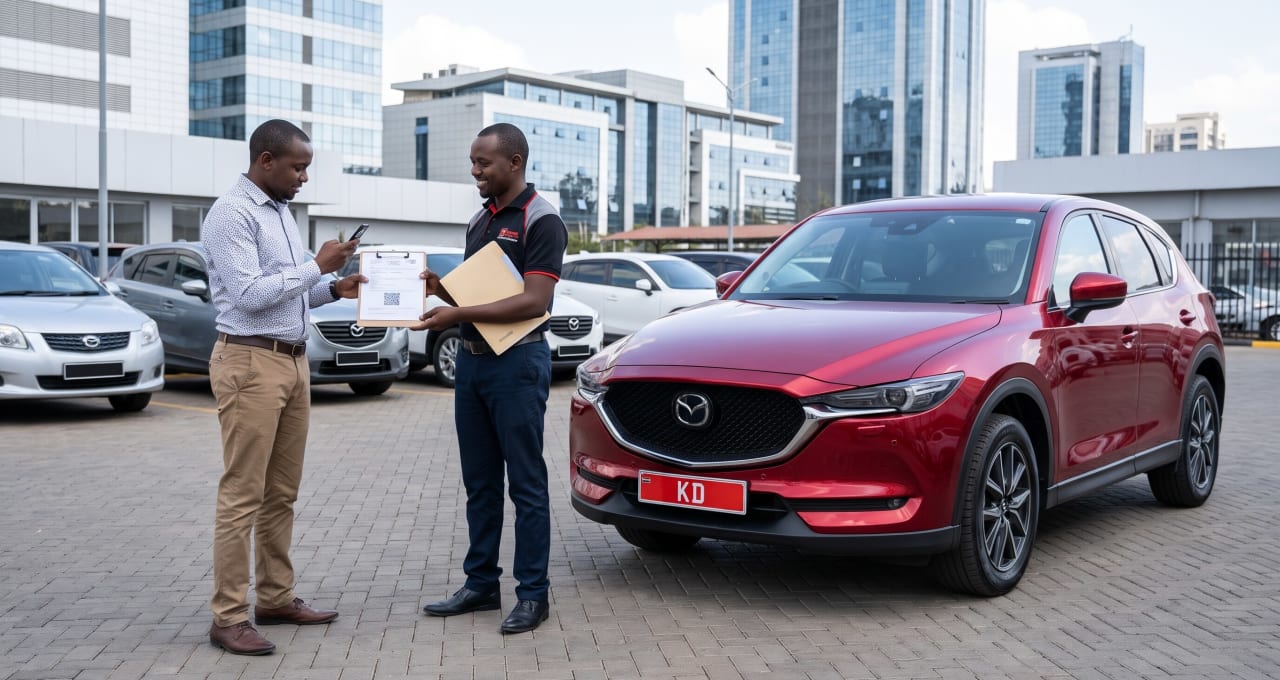
Verify KEBS KS 1515:2019 Compliance for Fresh Imports: If you are buying a foreign used import, confirm that the vehicle adheres to Kenya's mandatory eight-year age rule. Request the original Japanese auction sheet to confirm the genuine auction grade and cross-reference the chassis number against the official Quality Inspection Services Inc. Japan (QISJ) Certificate of Roadworthiness to verify that the digital odometer has not been rolled back.
Conduct an Official NTSA Search on eCitizen: For any locally registered car carrying Kenyan number plates, log into the eCitizen portal and execute an Official Motor Vehicle Search at the statutory fee of KES 550. This official record reveals the true registered owner matching their National ID and KRA PIN, verifies that the chassis and engine stampings match the logbook exactly, and confirms that the vehicle is free of active bank loan caveats or financial encumbrances.
For more details on avoiding vehicle fraud, consult our comprehensive buying and selling safety guide on kemotives.
How to Find and Buy a Verified Hybrid on kemotives
Finding the right hybrid car in Kenya should be straightforward, transparent, and completely free of broker interference. On kemotives, we have designed our automotive platform to put buyers directly in control:
Browse Verified Listings: Every car listing on kemotives clearly indicates whether the vehicle is foreign used or locally used, allowing you to filter according to your budget and registration preferences.
Transparent Market Price Badges: To ensure you never overpay, our platform evaluates asking prices against live market listings of the exact same make, model, and year, displaying clear Good, Fair, or High price indicators. You can also research broader market trends across Kenya using the kemotives Price Guide.
Direct Seller Contact with Zero Broker Markups: Connect directly with verified private owners and reputable car yard dealerships via direct phone call or WhatsApp message. There are no middleman fees, viewing deposit charges, or surprise broker commissions.
Selling Your Current Car: If you are looking to upgrade to a fuel-efficient hybrid and need to sell your current vehicle, you can list your car on kemotives in under two minutes. Our automated system blurs your number plates automatically to protect your privacy, auto-fills vehicle specifications with AI Smart-Fill, provides up to 10 free active listings on our Starter plan (with a 1% to 3.5% success fee only when your vehicle sells through kemotives), and charges 0% commission on all paid seller plans. Review our transparent options on the kemotives pricing page.
Frequently Asked Questions About Hybrid Cars in Kenya
1. What is the most fuel-efficient hybrid car in Kenya under 1.5 million shillings?
The Toyota Aqua and Nissan Note e-Power are tied as the most fuel-efficient hybrid cars in Kenya under 1.5 million shillings, with both models achieving between 23 and 28 kilometres per litre in mixed driving. In heavy Nairobi rush-hour traffic, the Nissan Note e-Power frequently edges ahead due to its full electric-drive motor and regenerative e-Pedal system, while the Toyota Aqua delivers exceptional consistency across both urban and rural highway journeys.
2. How much does it cost to replace a hybrid car battery in Kenya?
Replacing a complete pre-owned, tested Japanese imported hybrid battery pack in Kenya typically costs between KES 75,000 and KES 120,000 for a Toyota Aqua, KES 90,000 to KES 140,000 for a Nissan Note e-Power, and KES 95,000 to KES 150,000 for a Honda Fit Hybrid, inclusive of diagnostic programming and workshop installation. If only specific battery cells have weakened, specialized hybrid workshops in Nairobi can replace individual cell modules for between KES 8,000 and KES 25,000 per module.
3. Can you drive a hybrid car in Kenya if the hybrid battery is completely dead?
No, you cannot drive a hybrid car if the high-voltage traction battery is completely depleted or structurally failed. In all three vehicles (Nissan Note e-Power, Honda Fit Hybrid, and Toyota Aqua), the high-voltage battery is responsible for cranking the petrol engine and operating critical electrical systems. If the hybrid battery fails completely, the vehicle's onboard computer will illuminate a master warning light and enter limp mode or refuse to start until the battery fault is resolved.
4. Are hybrid cars suitable for ride-hailing services like Uber and Bolt in Nairobi?
Yes, hybrid cars are exceptionally well-suited for ride-hailing platforms like Uber and Bolt, and they represent the fastest-growing vehicle category among commercial fleet operators in Nairobi. With pump prices exceeding KSh 226 per litre, driving an Aqua, Note e-Power, or Fit Hybrid delivering over 22 kilometres per litre cuts a driver's daily fuel expense by nearly half compared to standard 1,500cc petrol sedans, allowing operators to earn substantially higher net daily earnings.
5. Does EPRA set higher fuel prices for diesel than petrol in Kenya?
Yes, in the official EPRA pricing review for November 15 to December 14, 2026, maximum retail pump prices in Nairobi were gazetted at KSh 227.76 per litre for Diesel compared to KSh 226.96 per litre for Super Petrol. Because diesel no longer holds a price discount over petrol at Kenyan filling stations, petrol-electric hybrids have become significantly more economical to operate than small diesel passenger cars.
6. How do I check if a hybrid car has an active bank loan caveat before paying?
To verify whether a Kenyan-registered hybrid car is free of bank caveats, log into your personal eCitizen account and navigate to the NTSA portal to conduct an Official Motor Vehicle Search for KES 550. The resulting official search document displays the registered owner's legal name, National ID, and KRA PIN, and will explicitly record any active financial encumbrance, logbook loan caveat, or court order registered against the vehicle by commercial banks or microfinance institutions.
Ready to start saving on your daily fuel costs? Browse verified Foreign Used Hybrid Cars and Locally Used Hybrid Cars on kemotives, compare live market asking prices side by side, and contact verified sellers across Kenya today.
Was this guide helpful?
Your feedback helps us keep our Kenyan car buying and selling guides accurate.