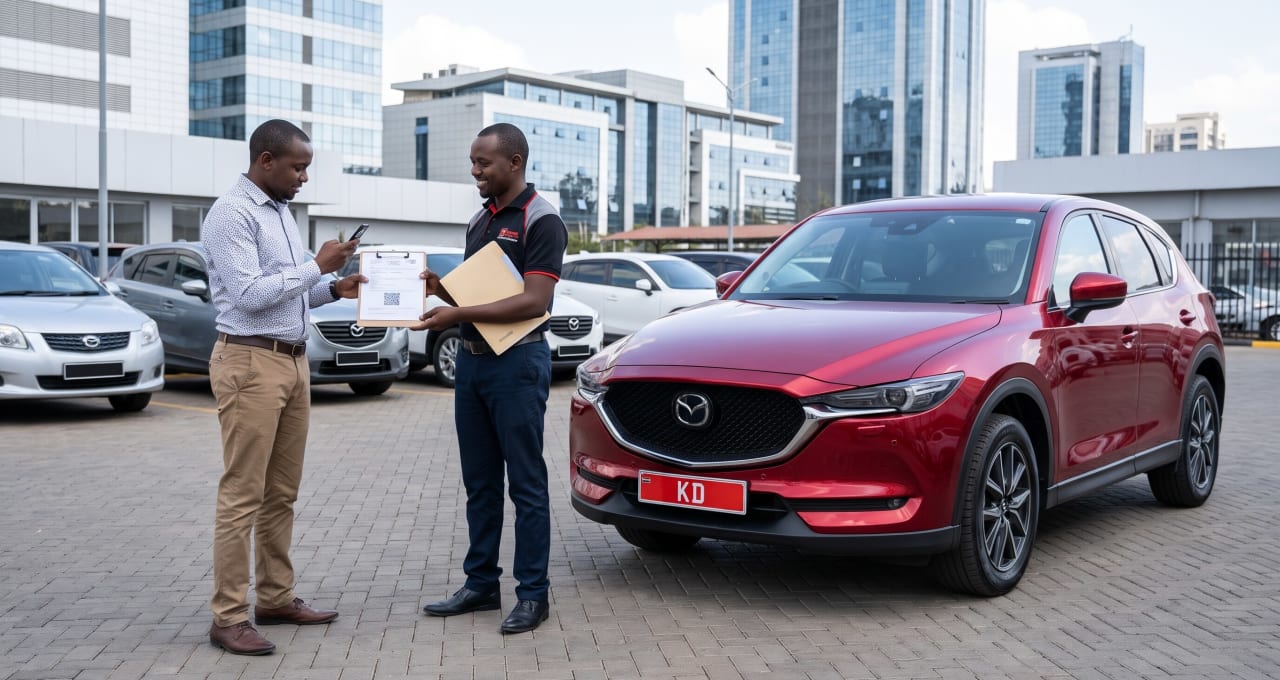
Practical guide to buying a locally used car in Kenya: why Kenyan-registered cars make financial sense, 4 common scams to avoid, and a step-by-step NTSA, mechanical, and payment checklist.
To buy a locally used car safely in Kenya, always verify ownership first with an official NTSA search on eCitizen, confirm that the seller's National ID and KRA PIN match the original logbook with no bank caveats, have an independent mechanic inspect the vehicle and stampings in daylight, sign a witnessed Car Sale Agreement, and pay via traceable bank transfer (RTGS/Pesalink) only as the seller initiates the online logbook transfer on eCitizen.
Because shipping costs, KRA import duties, and port charges continue to push up the price of fresh imports, Buying a Kenyan-registered vehicle provides immediate access to ownership alongside reduced upfront expenses, saving buyers roughly 15% to 40% compared to importing a foreign-used car. Information presented here remains verified according to NTSA and eCitizen guidelines as of November 2026.
Compared with importing a vehicle from Japan or the UK, buying a car that is already registered and driven in Kenya offers several practical advantages. Upfront costs are completely transparent because a locally used car has already cleared customs, eliminating unexpected sea freight, KRA import duty, excise duty, VAT, Railway Development Levy (RDL), and Mombasa port clearing charges. The final price consists simply of what you negotiate with the seller plus the statutory NTSA transfer fee of about KES 1,660 to KES 5,915. Additionally, you can thoroughly inspect and test-drive the vehicle before paying, reviewing local garage service receipts, checking bodywork, cold-starting the engine, and driving on local roads rather than relying blindly on overseas auction sheets. Ownership transfer is remarkably fast, taking just 3 to 7 working days through the NTSA portal on eCitizen once both parties accept, compared to waiting 30 to 60 days for shipping. Because the car already carries local registration, insurance and valuation processes are straightforward and immediate. Popular locally used models such as the Toyota Fielder, Axio, Premio, Mazda Demio, CX-5, and Subaru Forester benefit from widely available spare parts and mechanics who are intimately familiar with their wear points. You can browse locally used cars for sale on kemotives to evaluate current asking prices across Kenya.
When shortlisting a vehicle, buyers should evaluate key verification steps carefully. First, check that the asking price falls within a realistic market range for the make, model, and year rather than acting as a lowball deposit trap, using resources like the kemotives Price Guide. Second, verify legal ownership by ensuring the registered owner's name matches the seller's National ID and KRA PIN, with zero bank or microfinance caveats, backed by an official NTSA Search on eCitizen for as low as KES 550. Third, verify physical identity by ensuring metal chassis and engine stampings match the logbook and eCitizen record character-for-character during a physical daylight inspection. Fourth, assess mechanical health by confirming there is no hidden accident damage, frame welds, odometer rollback, or fault codes through an independent mechanic's OBD-II diagnostic scan. Finally, secure the payment and transfer by completing a signed contract and having the seller initiate the eCitizen transfer before releasing funds via bank transfer or banker's cheque.
While online listings make comparing cars convenient, unregulated social media pages and classifieds frequently host fraudulent listings. A common tactic involves duplicate listings and ghost cars, where scammers copy photos from legitimate car yards or private sellers to post under multiple accounts at artificially low prices. To stay safe, reverse-check listing photos across platforms and look for verified seller badges. Another frequent pattern is the too-good-to-be-true deposit trap, where a vehicle is listed well below market value and the seller demands a deposit via M-Pesa to hold the car. Buyers should adhere to a strict rule never to send commitment fees, viewing fees, or transport money prior to inspecting the car and logbook in person.
Buyers must also guard against fake installment or lipa pole pole schemes, where fraudsters pose as dealerships offering flexible hire-purchase terms that require a 20% to 30% deposit upfront before disappearing or introducing unexpected fees. Always verify physical dealerships and execute hire-purchase agreements only with licensed financial institutions. Odometer tampering is another major risk, as sellers may roll back digital mileage to disguise severe wear or overdue service. Rather than trusting dashboard readings alone, inspect wear on pedals, steering wheels, seat bolsters, and door jamb oil stickers, and have a qualified mechanic read the vehicle's ECU using an OBD-II scanner.
The location and manner of meeting the seller are just as crucial as inspecting the vehicle itself. Always schedule viewings during daylight hours at public, busy locations such as petrol stations, shopping mall car parks, or established garages, avoiding isolated routes or private residences. Deal directly with the registered owner named on the logbook to ensure a seamless eCitizen transfer, and always bring a trusted mechanic to perform a thorough pre-purchase inspection.
Executing a purchase requires a methodical four-step process. First, verify ownership on eCitizen by requesting the registration number and a copy of the logbook, running an Official NTSA Motor Vehicle Search for KES 550, and confirming the seller's ID, PIN, and lack of encumbrances or unpaid commercial advance tax. Second, inspect the body, interior, and stampings in clear daylight, verifying that stamped chassis and engine numbers match the logbook without signs of alteration, while checking for uneven panel gaps, paint overspray, or fresh welds near the radiator support and spare wheel well. Third, conduct a mechanical inspection and test drive from a cold engine, checking for abnormal exhaust smoke, oil contamination, transmission hesitation, suspension play, or unresolved dashboard warning lights. Fourth, sign a comprehensive Car Sale Agreement witnessed by an advocate or independent witnesses, sit with the seller as they initiate the eCitizen logbook transfer, and pay using traceable methods like RTGS or banker's cheque before taking possession of the vehicle, keys, logbook, and documentation.
Common questions regarding used car purchases in Kenya often center on legal checks and timing. To check for outstanding loans or caveats, buyers can run an Official Motor Vehicle Search on the eCitizen NTSA portal using the vehicle plate for KES 550, which yields a search certificate listing registered owners and active financial charges. Understanding the difference between locally used and foreign used cars is also vital: locally used cars are already registered and driven locally, while foreign imports must adhere to the KEBS 8-year age limit under rule KS 1515:2019 and incur initial import duties. Consequently, locally used cars typically cost 15% to 40% less. Finally, payment should occur simultaneously with ownership transfer at handover: once the agreement is signed and the seller initiates transfer on eCitizen, the buyer can verify the pending transfer in their account, release payment traceably, and take full possession of the vehicle and logbook.
Was this guide helpful?
Your feedback helps us keep our Kenyan car buying and selling guides accurate.